Category: Practice Transitions & Valuation

Buying or selling a dental practice: valuation, due diligence, asset allocation, deal terms, DSO transitions and the real estate side of a sale.

  • Maximize the Value of your Practice during a transition with Upside Payments

    Maximize the Value of your Practice during a transition with Upside Payments

    Maximizing Value: Understanding Upside Payments in Practice Transitions

    Introduction
    As dental practice transitions become more intricate, sellers and buyers seek innovative ways to optimize the value exchange. One such method gaining traction is the use of upside payments in dental practice transition negotiations. In this comprehensive guide, we’ll delve into the intricacies of upside payments, exploring their structure, scenarios of application, calculation methods, and the role Align Healthcare Practices plays in navigating this terrain.

    What are Upside Payments?
    Upside payments, also known as earn-outs or performance-based incentives, are additional payments made to the seller based on the future performance of the dental practice post-transition. Unlike traditional lump-sum payments, upside payments are contingent upon the achievement of specific financial or operational milestones.

    How are Upside Payments usually Structured? 
    Upside payments can be structured in various ways, but common methods include earn-outs, where a portion of the purchase price is contingent upon meeting predetermined performance targets, and milestone payments, which are tied to the dental practice achieving specific milestones such as revenue or patient retention goals.

    How are Upside Payments used? 
    Upside payments are typically used in scenarios where there is uncertainty about the future performance of the practice or when the buyer and seller have differing expectations regarding the practice’s value. They are often employed in transitions involving practices with significant growth potential, such as those in emerging markets or with innovative service offerings.

    How Are Upside Payments Calculated?
    The calculation of upside payments depends on the agreed-upon performance metrics and targets outlined in the transition agreement. Common metrics include revenue growth, profit margins, patient retention rates, or specific clinical outcomes. The formula for calculating upside payments varies but often involves a percentage of the incremental revenue or profit generated above the baseline established at the time of the transition.

    How Can Align HealthCare Practices Help:
    At Align HealthCare Practices, we specialize in guiding sellers and buyers through the complexities of practice transitions, including the negotiation and structuring of upside payments. Our experienced consultants work closely with clients to identify realistic performance metrics, negotiate favorable terms, and ensure alignment between the parties’ interests. Additionally, our extensive network and industry expertise enable us to facilitate transparent communication and foster mutually beneficial agreements that maximize the value of the practice for all parties involved.

    Conclusion:
    In today’s dynamic dental practice transitions landscape, upside payments offer a strategic approach to aligning the interests of buyers and sellers and maximizing the value exchange in practice transitions. By understanding the intricacies of upside payments and leveraging the expertise of Align HealthCare Practices, dental professionals can navigate this terrain with confidence and achieve successful transitions that drive long-term growth and prosperity.


  • Smooth Transitions: Avoid Dental Practice Transition Disputes

    Smooth Transitions: Avoid Dental Practice Transition Disputes

    Smooth Transitions: How to Avoid Disputes in Your Dental Practice Transition

    Introduction

    As you navigate the intricate process of transitioning your dental practice, it’s essential to anticipate and mitigate potential disputes that may arise along the way. Various factors and details can lead to conflicts if not addressed proactively. In this comprehensive guide, we’ll explore common situations where disputes may arise during dental practice transitions and provide actionable strategies for avoiding them. By fostering transparency, understanding, and effective communication, you can pave the way for a smooth and successful transition.

    Example Situations Where Conflict May Arise:

    Employment Contracts & Independent Contractor Agreements:
    Disputes may arise regarding the terms and obligations outlined in employment contracts or agreements with independent contractors. Clarity and mutual understanding are crucial to prevent misunderstandings and conflicts.

    – Restrictive Covenants: Issues related to restrictive covenants, such as non-compete agreements, can lead to disputes between the buyer and seller regarding post-transition activities and competition within the market.

    – Staff Retention Reserves: Disagreements may occur concerning the allocation and utilization of staff retention reserves, which are essential for maintaining goodwill and continuity within the practice post-transition.

    – Lease Negotiation: Lease terms and conditions, including rent escalation clauses, lease renewal options, and responsibilities for property maintenance, must be clearly defined and understood by both parties to avoid disputes down the line.

    To ensure a successful transition and minimize the risk of disputes, transparency and anticipation of potential discrepancies are key. One common area where disputes may arise is with redos, which refer to non-income producing free redo work for existing patients that the buyer may not want to take on. By clearly defining expectations for redo work obligations during and after the transition, you can prevent unnecessary conflicts and maintain a harmonious transition process.

    Transition Disputes Can be Anticipated & Mitigated

    Gaining a comprehensive understanding of the context of the practice sale or transition is essential for mitigating disputes. By identifying the priorities and concerns of each party involved, you can address potential points of contention proactively and negotiate mutually beneficial solutions. Clear communication, thorough due diligence, and a collaborative approach are instrumental in fostering a smooth and successful transition.

    How Align Healthcare Practices Can Help your Practice Transition

    At Align Healthcare Practices, we understand the complexities of dental practice transitions and offer expert guidance to navigate the process with confidence. Our team of experienced consultants specializes in dental practice transition planning, ensuring that every aspect of the transition is carefully considered and executed. With our invaluable real estate brokerage expertise through our partner, Align Healthcare Real Estate, we can assist you in navigating lease negotiations, clarifying terms, and avoiding potential disputes related to the real estate component of your practice transition. Trust Align Healthcare Practices and Align Healthcare Real Estate to support you every step of the way toward a seamless transition and a prosperous future for your dental practice.

  • Maximizing Value: The Critical Role of Real Estate in Dental Practice Transition Valuations

    Maximizing Value: The Critical Role of Real Estate in Dental Practice Transition Valuations

    Introduction:

    As dental and healthcare practice owners navigate the intricate landscape of practice transitions, understanding the myriad factors influencing a practice’s value is essential. While revenue, patient base, and operational efficiency are key considerations, the real estate component often emerges as a pivotal factor in maximizing practice value.

    Factors in Determining Practice Value:

    Practice valuation encompasses a spectrum of factors, each contributing to the overall assessment of a practice’s worth. The usual practice valuation process includes evaluation of a practice’s financial, physical, and intangible values.

    • Financial components- Typically include profit and loss statements, profitability analysis and projections to gain a clear indication of a dental practice’s current financial position as well as its potential opportunity. Naturally, consistently stable revenues will improve a practice’s value.

    • Physical Value- Physical value considerations include: equipment and technology valuation, interior design and stylistic review, floor planning optimization and potential opportunities for optimization. In addition to these factors, the real estate component of any practice transition should not be overlooked as part of the physical offering.

    • Intangible Value- Practice reputation or goodwill, brand recognition, existing staff, and patient base all factor into the intangible value and can be incredibly important in determining a practice’s value. In today’s market, staff retention is becoming incredibly difficult so having a loyal, dedicated, happy staff is a tremendous factor in practice valuation.

    The valuation process is subjective and contextual so it is vital to have transition representation and partners guiding you through the process. Any reputable practice transition consultancy will guide you through the above elements in the valuation process. However, not many practice transition consultants will be able to understand, leverage, and negotiate the real estate aspects of a healthcare practice transition in a given region.
    At Align Healthcare Practices, in addition to the listed dental practice transition components, we would thoroughly examine a practice’s real estate context. Is the practice real estate for sale? Is there a long-term lease that needs to be reviewed? Is there sufficient time on the lease for a buyer to be approved for a loan? Each dental practice transition case is unique and requires a holistic view of all the dynamic factors leading to a practice’s valuation. Integrating specialized real estate expertise into a practice transition process is essential for optimizing practice value and mitigating potential risks.

    The Importance of Real Estate Brokerage in Practice Transitions

    Real estate brokerage assumes a central role in the practice transition process, particularly concerning property assets and lease agreements. With healthcare-specific real estate expertise, brokerage firms like Align Healthcare Practices bring a unique perspective to practice valuation. By conducting thorough property assessments, analyzing lease terms, and navigating complex market dynamics, real estate brokers unlock hidden value and optimize practice transitions for their clients.
    Location is a primary determinant of property value, with factors such as proximity to major thoroughfares, accessibility, and demographic trends influencing market dynamics. Additionally, lease terms, property condition, zoning regulations, and environmental factors must be carefully scrutinized to assess their impact on practice value and viability.
    The value of the interior space should not be overlooked either. Often, a practice’s current floor plan could be hiding some really valuable opportunities for optimization and office flow. A space’s ability to be expandable would also play a large part in a transition valuation as a potential opportunity for increasing the value of a dental practice.

    How Align Healthcare Practices Can Help Your Transition Process

    Align Healthcare Practices specializes in providing tailored solutions to dental and healthcare professionals seeking practice transitions. With a keen focus on the real estate component, our team leverages extensive industry experience and market insights to maximize practice value. From comprehensive practice appraisals and strategic lease negotiations to buyer/seller representation and transition planning, we offer a holistic approach that aligns with our clients’ unique goals and objectives.
    Take the first step towards optimizing your practice transition by filling out our form for a free practice review!

    Conclusion

    It’s evident that having a reliable team of advisors is more crucial than ever for planning the future of your dental practice. Even if a sale isn’t on the horizon for 2024, obtaining a current appraisal ensures you’re aware of your practice’s current value and have sufficient time to increase value wherever possible.
    Whether you’re considering a purchase or sale, it’s essential to have a lineup of experts by your side. This includes an attorney, accountant, financial planner, multiple lenders, dental practice transitions experts, and healthcare real estate brokers —all well-versed in the nuances of the dental industry. With the support of a seasoned team, you can navigate the complexities of practice transitions with confidence and foresight.
    With specialized expertise in healthcare real estate and a commitment to delivering exceptional results, Align Healthcare Practices stands as a trusted partner in achieving practice transition success.

  • Keys to Successful Practice Transitions: Asset Allocation

    Keys to Successful Practice Transitions: Asset Allocation

    Unlocking keys to Successful Practice Transitions: Understanding Asset Allocations

    Introduction to Asset Allocation

    Asset allocation in a dental transition refers to the strategic process of assigning the purchase price of a dental practice to its various tangible assets, such as equipment and supplies, and intangible assets such as goodwill and restrictive covenants. It involves determining the fair market value of each asset and allocating the purchase price accordingly. In this guide, we will explain the significance of asset allocation and its profound implications for practice transitions.

    Understanding Asset Allocation

    Asset Allocation, at its core, is an accounting term and tool for the practice transition process. It indicates to the IRS the unique mix of assets involved in this transition.

    Asset allocation is crucial in dental transitions because it affects how the purchase price is distributed among different assets and can have significant tax implications for both the buyer and the seller. Proper asset allocation ensures a fair and equitable distribution of value and helps avoid potential disputes during the transition process.

    The tax treatment of asset allocation can vary depending on how the purchase price is allocated among different assets. Sellers may be subject to capital gains tax on the portion of the purchase price allocated to assets like equipment and supplies, while the portion allocated to goodwill may qualify for more favorable tax treatment.

    How does asset allocation affect Practice Transitions?

    Amounts are Negotiable

    According to the IRS, the technical way to allocate the purchase price among different assets is to assign fair market value to identifiable assets and allocate the remainder, if any, to goodwill. 
    The definition of “fair market value” is the price an independent buyer and seller can agree upon. Therefore, the actual allocation of the purchase price is negotiable between the buyer and the seller, as long as both parties agree on the price allocated to each asset.

    The negotiability of amounts in asset allocation allows buyers and sellers to tailor the transaction to their specific needs and objectives. By engaging in transparent and collaborative negotiations, both parties can reach agreements that accurately reflect the value of the practice assets and facilitate a smooth transition process.

    How do you Negotiate?

    In a dental transition, asset allocation, purchase price, and accounts receivable, can be negotiated to ensure a mutually beneficial pricing outcome for both parties.

    Every transition is unique, because each party will always have their priorities. The key to a successful negotiation is understanding your leverage, the context of a transition, and how to keep all parties happy. This requires deep knowledge of all of the options, the practice transition landscape, accounting proficiency, real estate and more.

    What else is up for Negotiation?

    Various other terms and conditions, such as start date, restrictive covenants, treatment of current employees, right of first refusal on the building, and deposit, can also be negotiated as part of the transition agreement. Each of these factors contributes to the overall success and satisfaction of the transition process.

    The Importance of a Practice Transition Broker

    Having a practice broker to assist in asset allocation negotiations is crucial for ensuring a smooth and successful transition. A practice broker will possess the expertise and negotiating skills necessary to guarantee fair terms that benefit both parties, preserve the future success of the practice, and to help to engage a CPA to comply with IRS regulations and tax implications. Additionally, brokers will help streamline the process by being aware of all the contributing variables and how to leverage them ahead of negotiations, mitigate potential conflicts and maximize value.

    How Align Healthcare Practices Can Help

    At Align Healthcare Practices, we specialize in guiding dentists through the complex process of practice transitions and healthcare real estate. With our expertise and industry knowledge, we can partner with you to negotiate favorable terms, handle all aspects of asset allocation, and ensure a smooth and successful transition for all parties involved. Trust us to help you navigate the intricacies of practice transitions and achieve your desired outcome.

  • Understanding Staff Retention Reserves in Practice Transitions

    Understanding Staff Retention Reserves in Practice Transitions

    Introduction:

    In the intricate world of dental practice transitions, numerous factors come into play to ensure a seamless and successful transfer of ownership. One crucial aspect often overlooked but essential for both buyers and sellers is the concept of Staff Retention Reserves. In this comprehensive guide, we’ll delve into what Staff Retention Reserves are, why they matter in practice transitions, and how they contribute to the overall success of the transition process.

    What are Staff Retention Reserves?

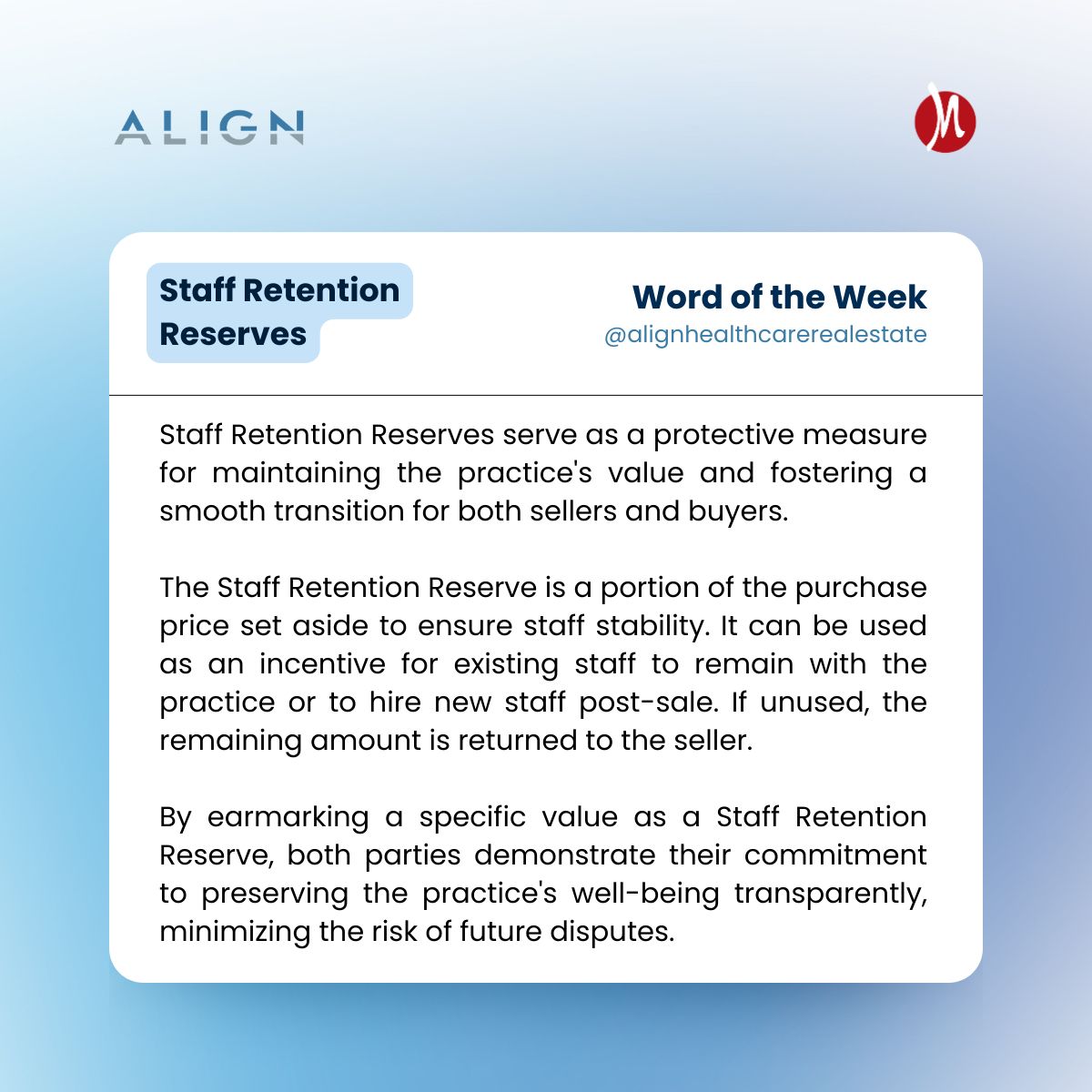
    Staff Retention Reserves are funds set aside from the purchase price of a dental practice to ensure the stability and continuity of the practice’s staff during and after the transition of ownership. These reserves serve as a safeguard to retain key staff members and mitigate the risks associated with potential turnover. This concept is mostly seen under DSO acquisitions.

    Importance of Staff Retention Reserves in Practice Transitions

    Staff retention is paramount in dental practice transitions as it directly impacts the practice’s goodwill, patient retention, and overall success post-transition. High turnover rates during a transition can lead to disruptions in patient care, loss of revenue, and a decline in practice value. By allocating a portion of the purchase price of the practice specifically for staff retention, both buyers and sellers demonstrate their commitment to maintaining the practice’s integrity and ensuring a smooth transition process.

    How Staff Retention Reserves Work:

    During the negotiation phase of a practice sale, the buyer and seller agree on the amount of the Staff Retention Reserve, typically calculated as a percentage of the total purchase price. This reserve is held in escrow or a separate account and is released under predetermined conditions.

    If existing staff members are retained after the transition, the funds from the reserve can be used as incentives or bonuses to encourage them to stay with the practice. Alternatively, if new staff members need to be hired post-transition, the reserves can cover recruitment and training expenses. In the event that the reserves are not needed, the money goes to the seller at a pre-negotiated date.

    Benefits of Staff Retention Reserves:

    1. Retaining Key Staff: Staff Retention Reserves provide financial incentives for existing staff members to remain with the practice, ensuring continuity of care and preserving patient relationships.

    2. Smooth Transition: By minimizing staff turnover, Staff Retention Reserves contribute to a smoother transition process, reducing disruptions in operations and patient care.

    3. Practice Value Preservation: Maintaining a stable and experienced team enhances the practice’s value and attractiveness to potential buyers, leading to a higher selling price.

    4. Buyer Confidence: Buyers are reassured by the presence of Staff Retention Reserves, knowing that measures are in place to retain essential staff members and safeguard the practice’s success post-transition.

    Considerations for Staff Retention Reserves:

    When negotiating Staff Retention Reserves, both buyers and sellers should consider several factors, including the current staff composition, their roles and responsibilities, and the anticipated impact of the transition on staff morale. Additionally, clear guidelines should be established regarding the release of reserve funds and any conditions attached to their use.

    Conclusion:

    In the dynamic landscape of dental practice transitions, Staff Retention Reserves play a crucial role in ensuring the continuity, stability, and success of the practice post-transition. By prioritizing staff retention and allocating funds specifically for this purpose, both buyers and sellers can navigate the complexities of practice transitions with confidence and achieve their desired outcomes.

  • Importance of Restrictive Covenants in Practice Transition Agreements

    Importance of Restrictive Covenants in Practice Transition Agreements

    Introduction:

    In the world of dental practice transitions, safeguarding practice goodwill is paramount. One of the most effective ways to protect your investment during a transition is through the use of restrictive covenants. In this blog post, we’ll delve into the importance of restrictive covenants, their role in protecting practice goodwill, and why working with a specialized healthcare practice broker is crucial in navigating this aspect of practice transitions.

    Understanding Restrictive Covenants:

    Restrictive covenants are contractual clauses that prohibit a party from engaging in certain acts for a specified period and within a certain geographical area. In the context of dental practice transitions, restrictive covenants typically involve clauses related to non-competition and non-solicitation of patients and staff members. These clauses play a crucial role in safeguarding the value of your practice during and after a transition.

    Protecting Practice Goodwill:

    Practice goodwill is the intangible value associated with a dental practice, including its reputation, patient base, and brand loyalty. Weak restrictive covenants can jeopardize this goodwill, leaving the selling dentist vulnerable to competition and patient loss. By negotiating strong restrictive covenants, dentists can protect the value they’ve worked hard to build over the years.

    Non-Competition Clauses: The First Consideration:

    Non-competition clauses are often the first line of defense in protecting practice goodwill. These clauses prevent the selling dentist from opening a new practice in direct competition with the buyer within a specified radius and for a set period. Without adequate non-competition clauses, patients may follow the selling dentist to their new practice, resulting in a significant loss of goodwill for the buyer.

    Negotiating Strong Restrictive Covenants:

    Effective negotiation of restrictive covenants is essential in practice transitions. Dentists should work with a specialized healthcare practice broker who understands the nuances of these agreements and can negotiate terms that effectively protect their interests. Comprehensive clauses, such as liquidated damages provisions,  can provide additional safeguards against breaches of restrictive covenants.

    Prohibiting Solicitation of Patients:

    In addition to non-competition clauses, practice transition agreements should include clauses prohibiting the solicitation of patients by the selling dentist. These clauses ensure that patients remain with the purchasing dentist after the transition, preserving practice goodwill and continuity of care. Patient chart transfer fees can be negotiated to compensate the purchasing dentist for any patients who choose to follow the selling dentist.

    Prohibiting Solicitation of Staff Members:

    Restrictive covenants should also prohibit the solicitation of staff members by the selling dentist. This ensures that the investment in training and retaining practice employees is protected during and after the transition. Liquidated damages clauses can be included to provide recourse in the event of staff solicitation.

    Expert Advice on Restrictive Covenants:

    Navigating the complexities of restrictive covenants requires expert advice from a specialized healthcare practice broker. These professionals have the experience and knowledge to draft and negotiate agreements that effectively protect their clients’ unique interests. Dentists should seek out brokers who specialize in healthcare practice transitions and have a track record of success in negotiating restrictive covenants.

    Safeguarding Your Dental Practice:

    In conclusion, restrictive covenants play a crucial role in safeguarding practice goodwill during practice transitions. Dentists must prioritize the negotiation of strong and comprehensive restrictive covenants to protect their investment and ensure a successful transition. Working with a specialized healthcare practice broker is essential in navigating this aspect of practice transitions and maximizing the value of your dental practice.

    Curious about how to safeguard your dental practice during a transition? Contact Align Healthcare Practices today for a free consultation with one of our specialized healthcare practice brokers. Our team has the expertise and experience to negotiate strong restrictive covenants that protect your practice goodwill and ensure a successful transition.

Free consultation